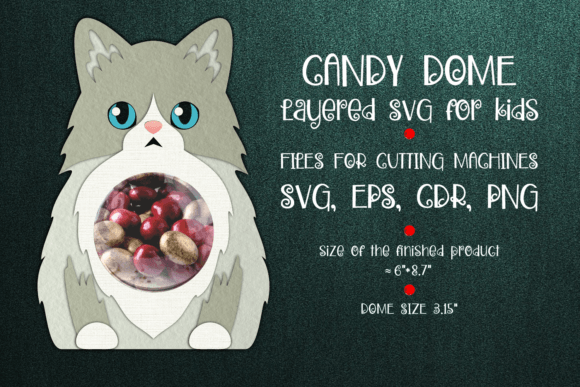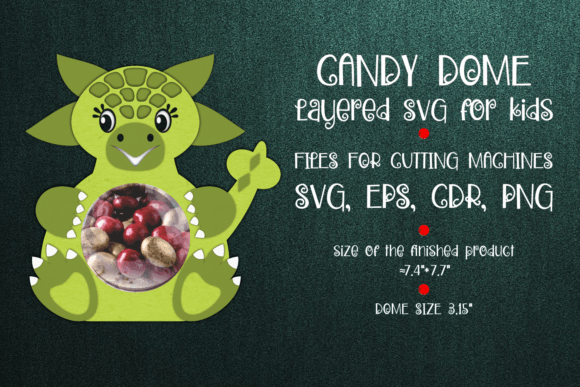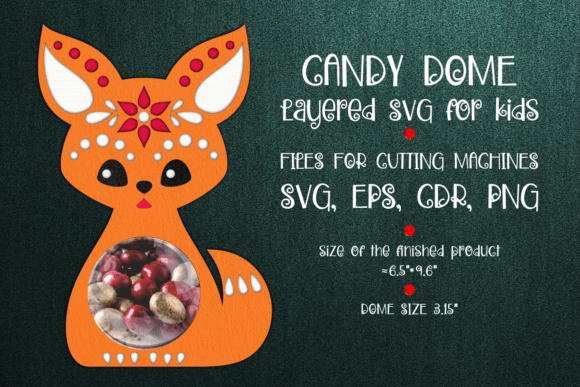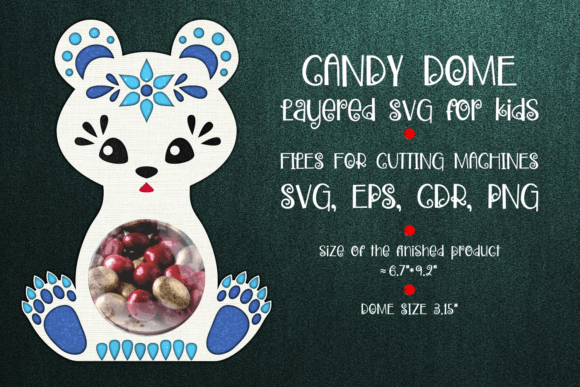
Baby Wolf Candy Dome Template: A Maker's Review
As a designer who constantly bridges the gap between digital assets and physical handmade products, I approach every new file with a healthy dose of skepticism. When I first opened the Baby Wolf Candy Dome Template, my immediate thought was not about the stitch count, but about the structural integrity of the concept. Marketed as a funny Christmas treat holder and a 3D SVG for cutting machines, this digital product presents a unique challenge for those of us in the embroidery and mixed-media space. We aren't just looking at a flat image; we are evaluating a three-dimensional form that needs to translate into a tangible, high-quality finished product. For Etsy sellers and small shop owners, the question isn't just "is it cute?" but "will this actually work when I put needle to fabric or blade to paper?"
First Impressions and Visual Personality
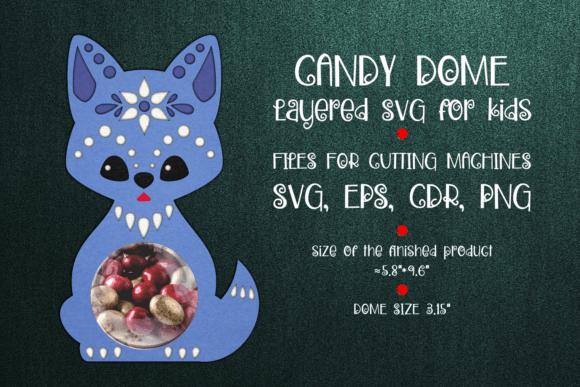
The Baby Wolf Candy Dome Template carries a distinct whimsical charm that feels perfectly calibrated for the modern holiday market. It avoids the overly saccharine aesthetic of traditional nursery designs, opting instead for a playful, slightly rustic character that appeals to both parents and gift-givers. As a shape-based design, the dome structure provides a satisfying geometric foundation that contrasts beautifully with the organic curves of the wolf illustration. From a design perspective, this balance is crucial. It creates a natural frame for personalization, whether you are adding a child’s name via machine embroidery or using vinyl for a quick turnaround.
However, because this is primarily a paper craft template adapted for multi-use, the visual weight is distributed differently than a standard embroidery file. The lines are optimized for cutting, which means they are continuous and bold. For an embroidery designer, this is actually a benefit. Bold lines translate exceptionally well to satin stitch borders or running stitch outlines without getting lost in the texture of the fabric. The mood is lighthearted yet professional enough to serve as a signature piece in a boutique holiday collection.
Real-World Application: The Custom Holiday Tote
To truly evaluate this asset, I mentally prototyped it for a specific real-life scenario: creating a personalized holiday tote bag for a local craft fair. Tote bags are a staple for any craft business, but they often suffer from generic designs. I envisioned using the Baby Wolf Candy Dome Template as the central focal point on a natural canvas tote.
In this application, the 3D aspect of the original template inspires a layered applique design. Instead of stitching the entire wolf and dome in dense fill stitch—which can make a tote bag stiff and heavy—I would use the template as a guide for cutting fabric layers. The dome could be a textured wool felt, while the wolf is a soft cotton flannel. This mixed-media approach leverages the strengths of the Shapes category. The result is a tactile, high-value handmade product that stands out against mass-produced screen prints. Customers at a market want to touch the goods; this design invites that interaction. Furthermore, the "candy dome" concept allows for functional creativity. You could stitch a clear vinyl pocket over the dome area to actually hold a candy cane or small ornament, bridging the gap between decorative embroidery and functional packaging.
Navigating Fabric Choices and Stabilizer Needs
While the design is versatile, it demands respect for material limitations. Because the Baby Wolf Candy Dome Template features curved edges and potentially intricate facial details, your choice of stabilizer is non-negotiable. If you are adapting this for stretchy fabrics like sweatshirt embroidery or baby clothes, you must use a high-quality cut-away stabilizer. A tear-away simply will not support the structural lines of a dome shape on knit fabric, leading to puckering that ruins the professional finish.
I would advise caution when using this design on highly textured fabrics like terry cloth or chunky knits. The detail level required to make the wolf recognizable can get swallowed by deep pile textures. If you are committed to using a textured base, consider adding a topping stabilizer or simplifying the design elements to thicker outlines. Conversely, on smooth fabrics like quilting cotton or poplin, the design will sing. For dark fabrics, ensure your thread colors have sufficient contrast. A dark grey wolf on a navy background might look moody in a digital mockup but will disappear in real life. Always test your color palette physically before committing to a production run.
Technical Considerations for Mixed-Media Makers
It is vital to remember that this is sold as a digital product for cutting machines. For embroidery professionals, this means you are likely working with a vector or raster image that requires digitizing or conversion. Do not assume this is a plug-and-play embroidery file unless explicitly stated. You must verify compatibility with your specific software. This extra step, however, offers a massive advantage: customization. Because you are working from the source template, you can adjust the size to fit any hoop size without losing resolution.
When digitizing or adapting this template, pay close attention to stitch density. The dome shape implies volume. Using a standard flat fill stitch might make it look lifeless. Consider using a puff foam technique under the satin stitches of the dome to mimic the 3D nature of the original paper craft. Alternatively, vary your stitch direction to create a sense of curvature. These subtle technical decisions elevate a simple graphic into a premium embroidered patch or apparel accent. Always run a test stitch-out on scrap fabric that matches your final project weight. Check how the curves register and whether the alignment marks (if you add them) are accurate.
Commercial Viability and Customer Trust
For Etsy sellers and creative entrepreneurs, the Baby Wolf Candy Dome Template represents a strong commercial opportunity, provided it is executed with quality. In the saturated holiday market, buyers are looking for uniqueness. A 3D-inspired embroidery piece signals effort and skill. However, professionalism lies in the details. Ensure your listing photos show the texture and scale accurately. Use printable mockups to visualize placement, but always include a photo of the actual stitched or assembled product to build trust.
Before listing any finished product, rigorously check the licensing terms included with your download. Confirm whether you have commercial rights for physical items versus digital redistribution. Nothing damages a small shop’s reputation faster than intellectual property disputes. Additionally, consider the washability of your final creation. If this is intended for baby embroidery or kitchen linens, the materials and threads must withstand frequent laundering. A beautiful candy dome that frays after one wash will result in negative reviews. Secure your edges, use durable threads, and provide care instructions with every sale.
Final Designer Verdict
The Baby Wolf Candy Dome Template is more than just a seasonal novelty; it is a flexible design asset that rewards thoughtful adaptation. It bridges the niche between paper crafting and textile arts, offering makers a chance to create cross-category products. Whether you are producing custom apparel, nursery decor, or holiday gifts, success lies in respecting the translation from screen to substrate. Test thoroughly, stabilize appropriately, and leverage the 3D aesthetic to add tangible value to your work. When treated with technical care, this template can become a standout bestseller in your holiday lineup, delighting customers who appreciate the intersection of digital precision and handmade warmth.