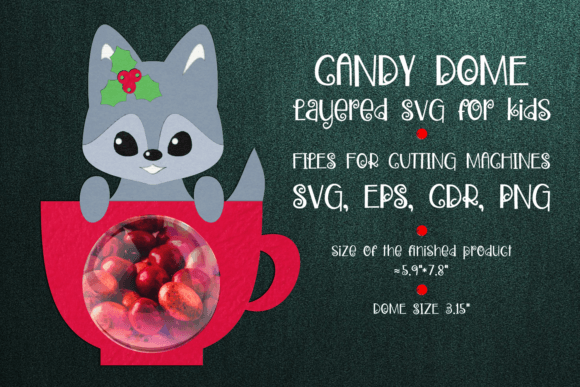
Wolf in a Cup Christmas Candy Dome Review
As a designer who bridges the gap between digital assets and tangible textiles, I approach every new file with a specific question: will this actually work on fabric? The Wolf in a Cup Christmas Candy Dome presents an interesting hybrid challenge. Marketed primarily as a 3D SVG for paper crafts and candy holders, its whimsical aesthetic is undeniably charming. However, for embroidery designers, Etsy sellers, and makers looking to adapt this concept into stitched goods, we need to look past the cutting machine instructions and evaluate the structural integrity of the design itself. My assessment focuses on translating this visual personality into a durable, high-quality machine embroidery design that customers will actually want to buy and keep.
Translating Paper Craft Aesthetics to Stitch
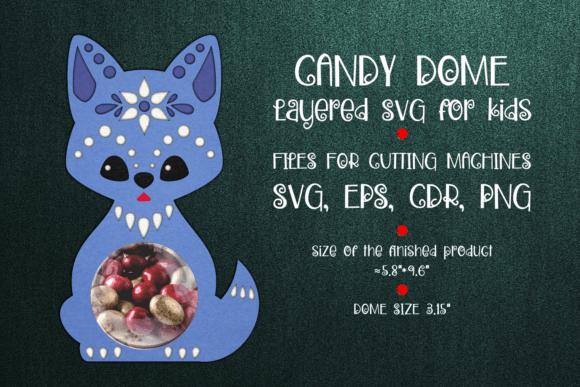
The first impression of the Wolf in a Cup Christmas Candy Dome is one of cozy nostalgia. It evokes a storybook quality that fits perfectly within the holiday season. Visually, the dome shape suggests containment and focus, which is excellent for composition. However, designs intended for paper or vinyl often rely on thin lines and intricate cutouts that do not translate directly to thread. When evaluating this for a real embroidery project, I immediately look at the line weight. If the original vector art features hairline details meant for a laser cutter, those must be reimagined as running stitch outlines or converted to satin stitch borders for textile use.
The "dome" aspect implies a curved top or a rounded container shape. In embroidery, maintaining a perfect curve requires careful digitizing to prevent puckering. For a handmade product, the wolf’s expression is the selling point. It needs to remain legible and emotive even when scaled down. If the facial features are too complex for the intended hoop size, the charm gets lost in a mess of thread. As a reviewer, I value designs where the artist understands that thread has thickness; the Wolf in a Cup concept succeeds only if the digitizer respects the physical limitations of the medium while preserving that signature storybook mood.
Real-World Application: The Holiday Sweatshirt Test
To truly judge the viability of this design, I mentally place it in a current best-selling scenario: a custom holiday sweatshirt for a small boutique. Imagine preparing a cream-colored fleece crewneck for a client who wants something unique but festive. The Wolf in a Cup Christmas Candy Dome offers a distinct alternative to generic reindeer or snowman motifs. It feels curated and specific, which helps build brand recognition for an Etsy seller or small shop product line.
In this scenario, I would likely treat the cup or dome element as an applique design. Using a textured cotton or velvet fabric for the cup creates a tactile contrast against the smooth fleece sweatshirt. This mixed-media approach elevates the perceived value of the custom apparel. The wolf could be rendered in dense fill stitch to stand out against the applique background. However, because sweatshirts are stretchy and prone to shifting, this application demands rigorous testing. The design must have adequate underlay to anchor the fabric without making the chest area feel like armor. If the Wolf in a Cup design is too dense, it will distort the garment's drape. A successful adaptation balances visual impact with wearability, ensuring the finished product remains soft and comfortable.
Navigating Fabric Limitations and Hoop Constraints
While the design shines on stable fleece, caution is required for other substrates. I would hesitate to use a detailed version of this design on lightweight baby clothes or sheer tea towels unless significant modifications are made. The density required to render a recognizable wolf face can overwhelm thin fabrics, leading to tearing or excessive stiffness. For baby embroidery, a simplified outline version or a smaller badge-style iteration is safer and more appropriate.
Textured fabrics like terry cloth or boucle also present challenges. The intricate details of a candy dome shape can get swallowed by the pile of a kitchen towel. In these cases, increasing the column width of satin stitches and simplifying internal details is non-negotiable. Furthermore, dark fabrics require careful consideration of thread colors. A white wolf on a navy background pops beautifully, but if the design relies on subtle shading gradients, those nuances may disappear on dark material. Always test high-contrast versions before committing to production runs.
Curved surfaces like caps are another area requiring scrutiny. The dome shape naturally complements a hat front, but the vertical height of the wolf-and-cup combination might exceed standard cap frames. Before listing a hat featuring this design, verify that the aspect ratio fits your specific equipment. Distortion at the edges of a curved embroidered patch or direct-to-cap stitch-out can ruin the professional finish you aim for.
Commercial Viability and Professional Presentation
For creative entrepreneurs, the Wolf in a Cup Christmas Candy Dome represents more than just a pretty picture; it is a potential revenue stream. However, commercial success hinges on consistency and trust. Customers returning to your shop expect the same quality across different items. If you offer this as a tote bag design one week and a nursery pillow the next, the stitch count and style should feel cohesive. This builds brand identity.
When creating listings, avoid using only the digital rendering. Buyers need to see how the design interacts with real fabric texture. Invest time in stitching out samples on various materials to photograph. A printable mockup is useful for digital sales, but for physical goods, nothing replaces a photo of the actual embroidery. This transparency reduces returns and increases buyer confidence. Additionally, consider the giftability factor. This design lends itself well to personalized ornaments or keepsake boxes. Positioning it as a personalized gift option rather than just a generic decoration can significantly increase conversion rates during the holiday rush.
Essential Designer Notes for Success
Before you load this file into your machine or list it in your store, adhere to these practical checkpoints derived from professional experience:
- Verify Licensing and Compatibility: Since this is marketed as a digital download for cutting machines, confirm explicitly that you have the rights to use it for commercial embroidery. Ensure you possess the correct software to convert or open the files if they are not native embroidery formats.
- Test on Scrap Fabric First: Never run a new design directly on a sellable item. Use scraps of the exact fabric and stabilizer combination you plan to use for the final product to check for registration issues or puckering.
- Audit Stitch Density: Check the properties in your embroidery software. If the design was auto-digitized from a paper craft SVG, the density may be erratic. Manually adjust fill areas to ensure proper coverage without bulletproof stiffness.
- Check Small Detail Legibility: Zoom in to 100% scale. Are the wolf’s eyes clear? Is the rim of the cup defined? If details merge at actual size, simplify them. Clarity trumps complexity in holiday embroidery.
- Evaluate Color Contrast: Test the design in grayscale to ensure values read correctly without relying solely on color differences. This ensures the design works on both light and dark garments.
- Confirm Hoop Size Requirements: Do not assume the design fits your smallest hoop. Measure the actual stitch field dimensions and compare them against your machine’s capabilities and the usable area of your chosen blank.
- Review Stabilizer Pairing: Match the stabilizer to the fabric weight and design density. A heavy fill stitch wolf on a knit requires cut-away stabilizer, whereas a running stitch outline on woven cotton might only need tear-away.
The Wolf in a Cup Christmas Candy Dome holds immense potential for makers willing to treat it as a starting point rather than a finished solution. By applying critical design judgment and respecting the mechanics of machine embroidery, you can transform this digital asset into a standout commercial embroidery offering that delights customers and strengthens your handmade business.